My first train booking in China
On my first attempt in Beijing, we wanted to buy a train ticket at the counter one day before departure. Because of language issues, that did not really work. The official Chinese railway platform 12306 exists, but for many German speaking travellers it is not the easiest first step. That is why we used Trip.com.
There we could book train tickets with the passport number. This is the key point: in China, the train ticket is tied to the passport number. The passport is therefore practically the ticket. A printed paper ticket is normally not needed for boarding.
At the station: passport instead of paper ticket
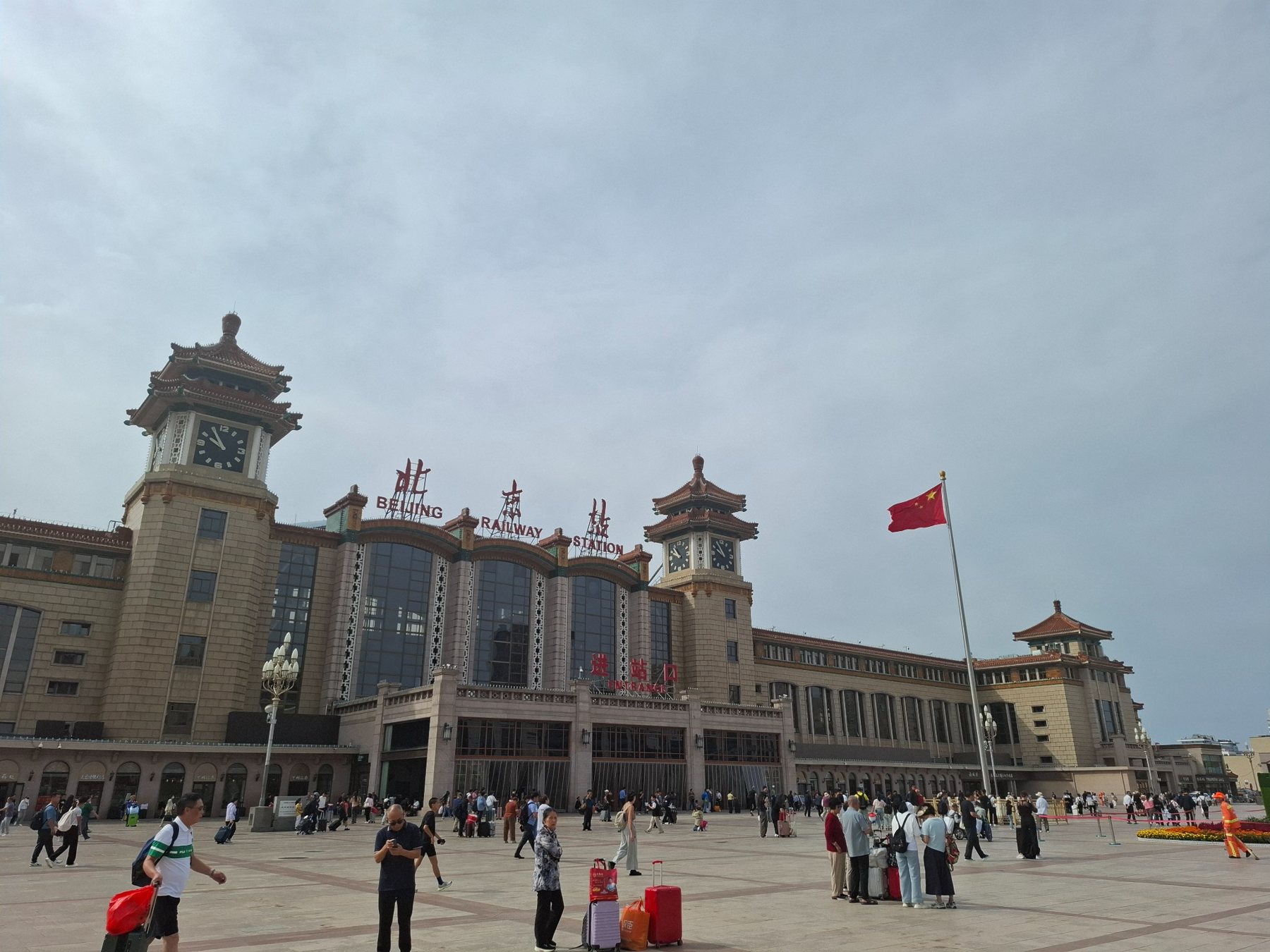
On the day of departure, we went to Beijing Railway Station several hours early. At first, we still tried to get something printed at the counter. Eventually we did have a printout in our hands. Looking back, however, that was not the decisive point.
The decisive point is the passport. At the gate, the booking is found through the passport number. Chinese travellers can often pass through automatic gates with their Chinese ID. With a German or Swiss passport, the automatic scanners do not always work. Then you need the staffed manual gate, where staff check the passport.
It feels confusing the first time. But once you understand the principle, it becomes logical: the ticket is not the printout, but the booking linked to the passport number.
Do not go to the platform too early
The second confusing point was platform access. We wanted to find the platform and simply go down. That did not work. The gate staff did not let us through at first, although the train was leaving soon.
The reason: in China, passengers are often only allowed to the platform once the train is ready or boarding has opened. Trains are tightly scheduled and the process is highly organized. You wait in the waiting hall and pass the gate later.
My tip: do not panic if access does not work twenty minutes before departure. Watch the displays, ask staff and use the staffed manual channel with a foreign passport.
Stations feel more like airports
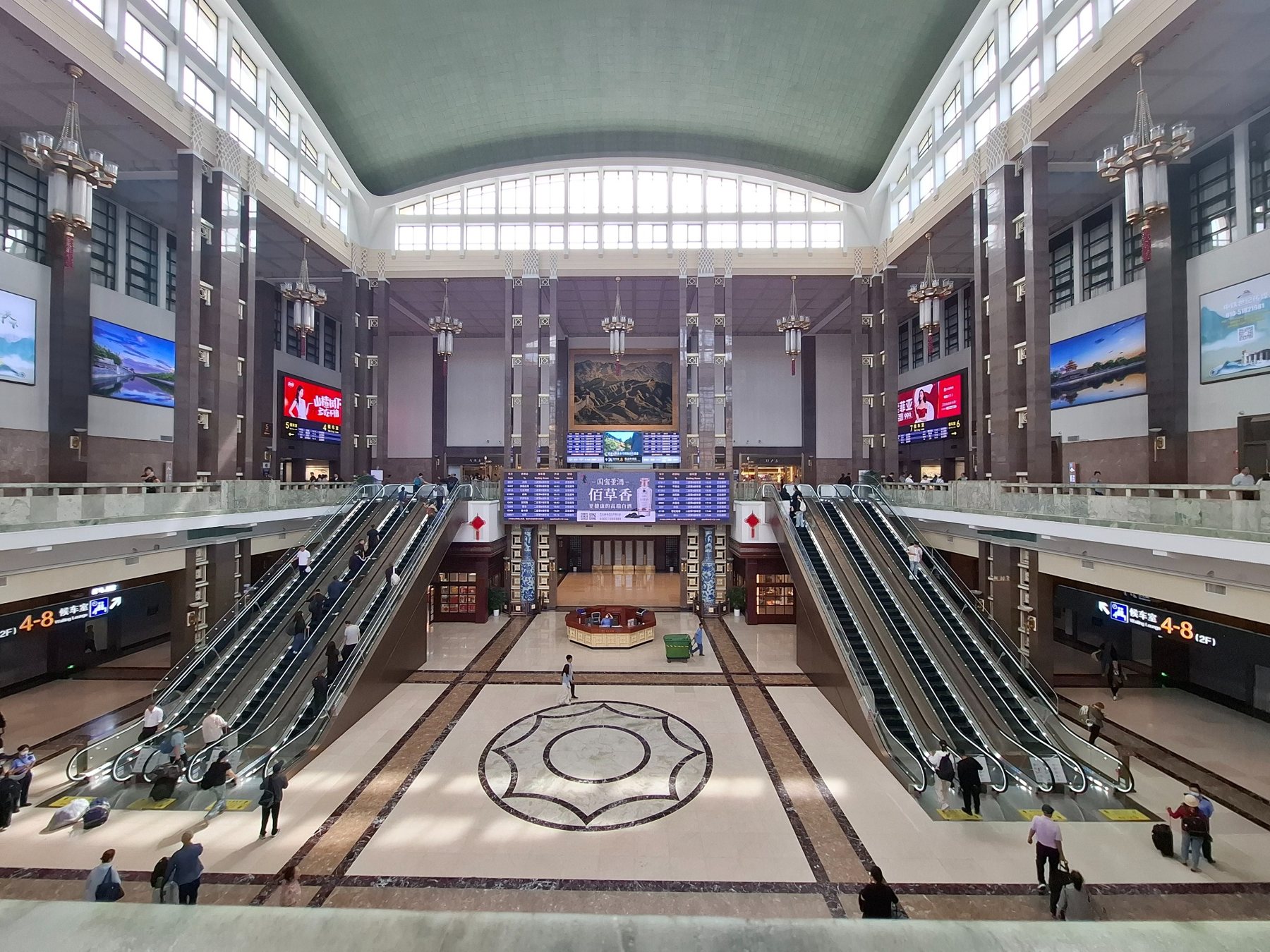
Many Chinese railway stations are large, clearly organized and built around security checks, waiting areas, displays and gate logic. You do not simply walk to the platform at any time, but follow a structured process.
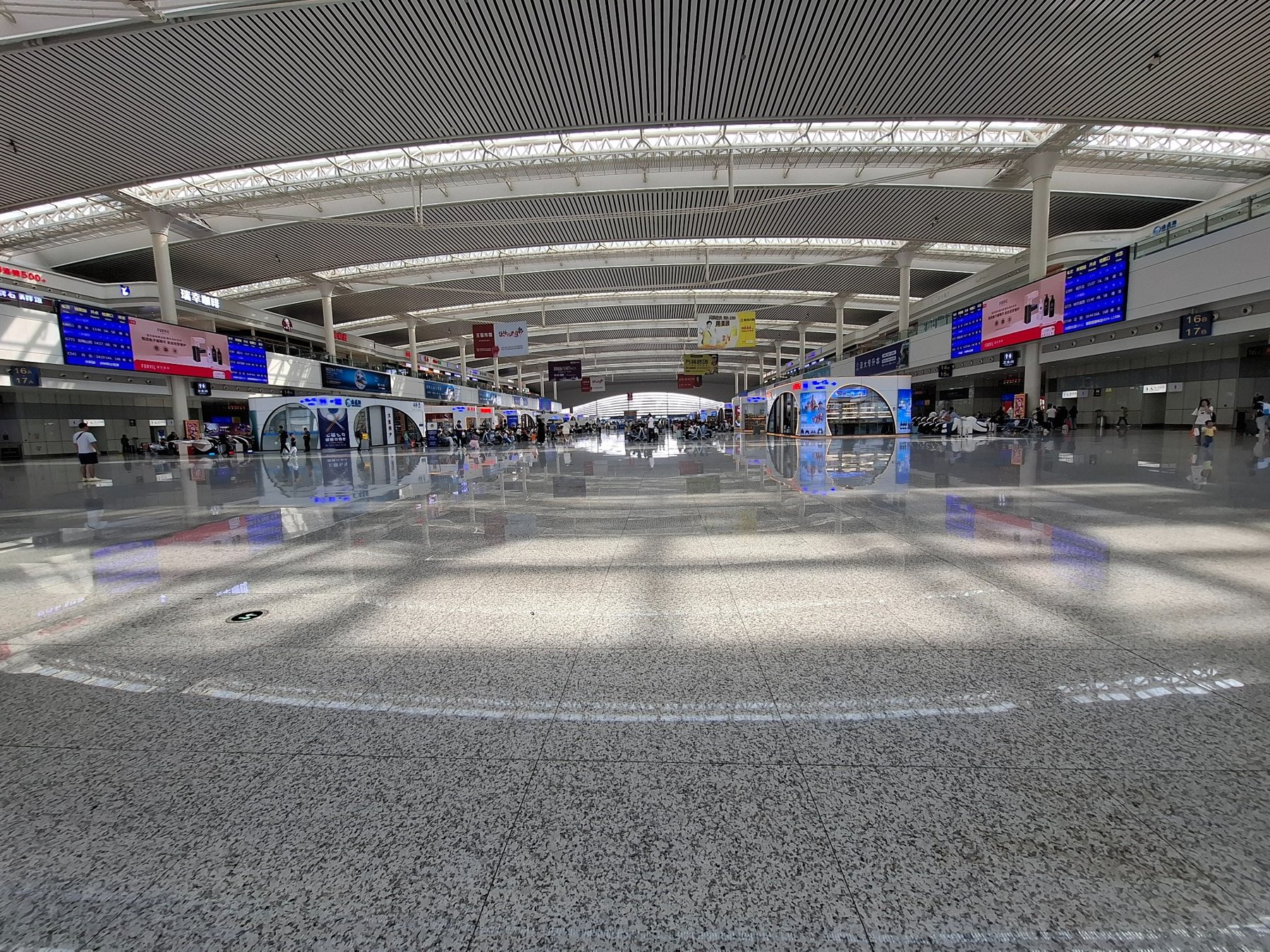
This is not only true in Beijing. Dalian Railway Station also shows this modern infrastructure: huge halls, lots of space, long display rows and clearly separated gate areas.
Example route: Beijing South to Shanghai
The route from Beijing South to Shanghai is a good example of why train travel in China is so strong. The Beijing Shanghai high speed railway is about 1,318 kilometres long. G category trains usually run at 300 to 350 km/h on this route and take roughly four and a half to six hours, depending on the connection. The fastest services are listed at about four hours eighteen minutes.
For that distance, this is extremely practical: city start, city arrival, no airport transfer and still a journey speed that feels very calm inside the train.
Transparency: The link to Trip.com is a partner link. If a booking is made through this link, the site operator may receive a commission. The visitor price should not increase because of this. The recommendation is based on own use.
333 km/h can feel surprisingly calm
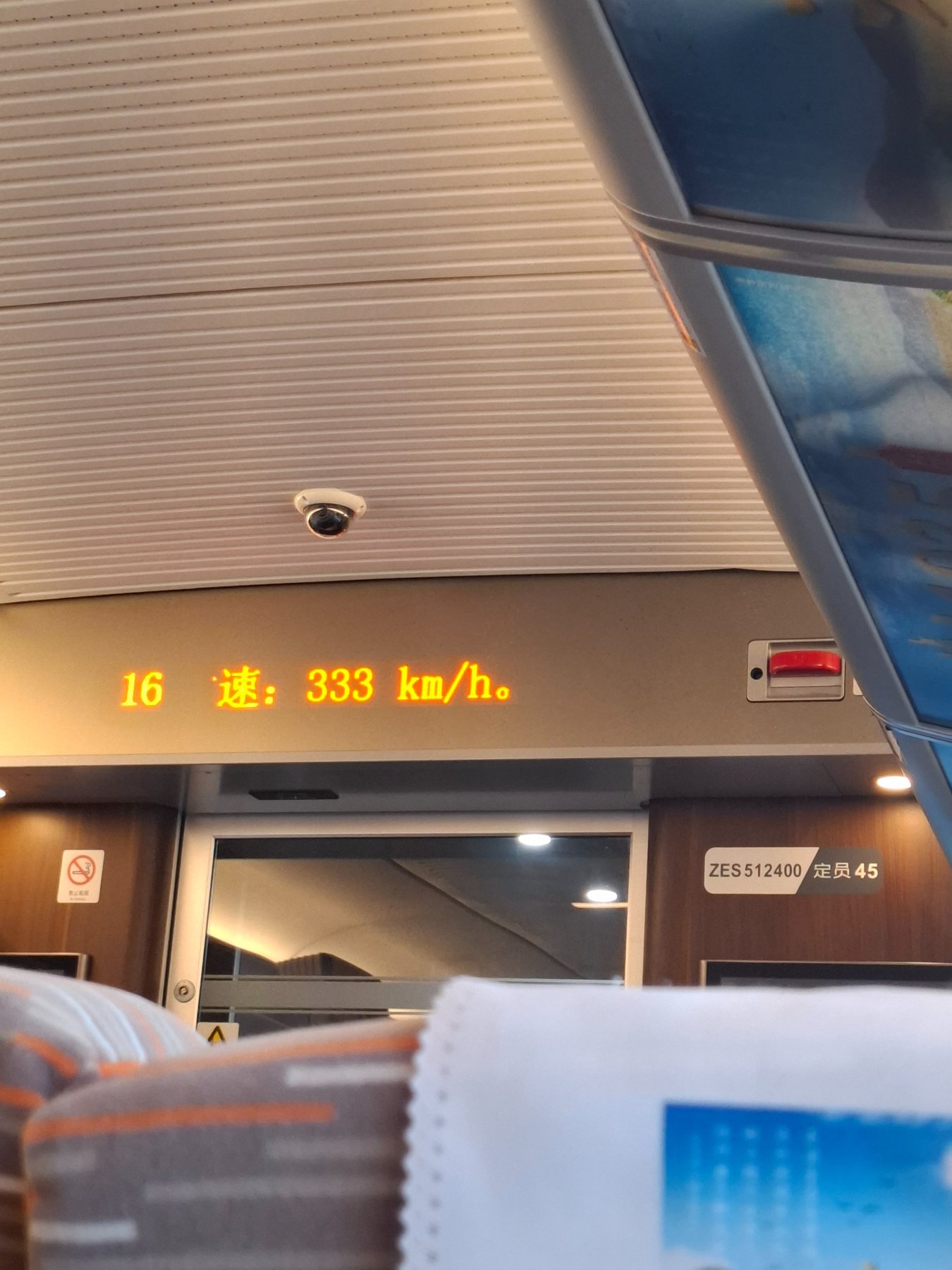
On Chinese high speed lines, you often see speeds far above 300 km/h inside the train. The photo shows 333 km/h. This is not a staged figure, but normal high speed rail reality on suitable routes.
Depending on route and train type, 250 to 350 km/h is realistic in regular operation. Current Fuxing CR400 trains run up to 350 km/h in regular service. Higher speeds are a topic for newer generations and testing, but for travellers the current service is already impressively fast.
Why trains in China feel so comfortable
Chinese high speed trains often feel very spacious. This is not because of a different track gauge from Europe, but mainly because of the broad car bodies. Fuxing CR400 trains, for example, have a car body width of about 3.36 metres. That makes the interior feel more generous than in many European trains.
The infrastructure also matters. Many Chinese high speed lines are newly built, relatively straight and designed for high speeds. That is why the train runs very evenly for long stretches.
Why Trip.com is practical
Trip.com charges a small service fee for train tickets compared with the direct Chinese railway platform. For China travel, I find that acceptable because the interface is much easier, booking with a foreign passport is clearer and changes or cancellations are easier to follow.
Train tickets are not only about price comparison. The important part is that the booking really works, the passport number is stored correctly and you do not stand at the station with an unclear reservation.
Practical rules for a first train trip
Name and passport number must match the booking. The station check is based on this.
Chinese railway stations can be huge. Being early is better than rushing at the wrong entrance.
Automatic gates are often built around Chinese ID cards. With a passport, it is safer to use the staff channel.
Four impressions from train travel in China
Here are all four travel photos clearly visible once more: Beijing Railway Station from outside, the station hall in Beijing, the large hall inside Dalian Railway Station and the speed display showing 333 km/h inside the train.